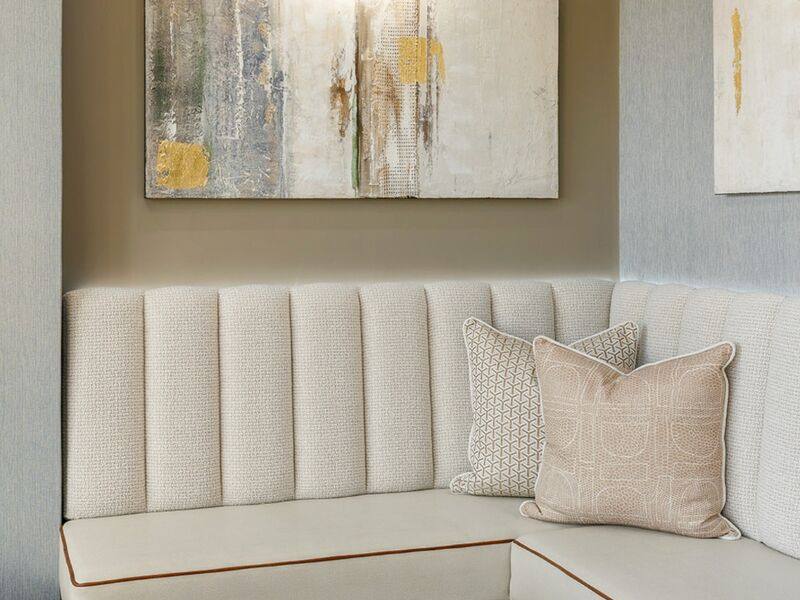
A reupholstered settee keeps its original frame intact while the fabric, padding and springs are replaced or restored. A professional upholsterer assesses the frame’s condition first—sound wood and working springs mean recovery is worthwhile; damaged frames may need structural work before new upholstery begins. The studio examines your settee in detail to give you honest advice on whether recovery makes sense for your piece.
When is a settee worth recovering?
Not every old settee is worth the investment. The frame is the deciding factor. A settee with a solid wooden frame, intact joints and no woodworm or rot is a candidate for recovery. Springs and webbing can be repaired or replaced; fabric wears out naturally and is replaced as part of the work. But if the frame is weak, splitting, or held together mainly by upholstery, recovery becomes expensive or impossible because the underlying structure must be fixed first.
The studio’s designer and residential reupholstery portfolio includes settees that have been kept in family homes for decades. These pieces are worth recovering because their frames have survived and the proportions or design matter to the owner. A mid-century settee with good bones, an antique piece with historical value, or a bespoke frame made to fit a specific room are all sensible candidates. A modern flat-pack settee with a chipboard base and glued joints, by contrast, rarely justifies the cost of full recovery.
Age alone does not determine value. What matters is whether the frame can support new upholstery safely and whether the piece itself—for style, fit or sentiment—is worth the work. An honest assessment from the workshop removes guesswork. John will tell you clearly if recovery is worth doing or if replacement would be better sense.
What does a professional upholsterer look for when assessing your settee?
The assessment starts with the frame. The upholsterer inspects the wooden structure for splits, loose joints, woodworm or rot. They check that the seat frame is level and the arms are even. They test the seat base—whether it’s webbing (cloth straps) or a sprung platform—to see if it can support new padding and fabric. A frame with tight joints and no visible damage is a green light for recovery. Loose joints or soft wood signal that structural repair must come first.
Next, they examine the springs. Old coil springs are tested for rust, loss of tension and broken wires. Depending on their condition, springs might be cleaned and re-tied, replaced with new springs, or the seat can be rebuilt on a webbed and sprung base. The padding underneath the fabric is assessed too—flattened, lumpy or disintegrating padding will be removed and replaced as part of recovery.
Finally, the upholsterer notes the current fabric type, how the settee is constructed (hand-stitched or machine-sewn), and any special features like piping, buttoning or attached cushions. Antique pieces and bespoke furniture often reveal skilled craftsmanship; the workshop respects these details in the recovered design. A full assessment takes time because it informs the scope, cost and timeline of the work ahead.
What materials and choices will you make during recovery?
Fabric is the first and most visible choice. The upholsterer will show you samples in natural fibres (cotton, linen, wool) or modern blends, in the weight and weave that suit a settee’s use. Heavy-wear fabrics last longer in family homes; lighter fabrics suit less-used pieces. The studio sources durable, quality textiles and can advise on what will wear well in your room and match your décor. Colour and pattern are entirely yours; some clients keep to the original look, others refresh the style completely.
Padding is chosen for comfort and durability. Traditional settees often had horsehair or wool; modern recovery can use high-density foam, natural latex or a blend. The choice depends on the original construction style and your comfort preference. For antique pieces, the workshop aims to match historical methods where they make sense; for residential furniture in daily use, modern padding often performs better.
Piping, buttons, studs, and other details are optional. If your original settee had decorative buttoning or piped edges, these can be replicated in the new upholstery or simplified, depending on your budget and taste. Some clients prefer clean lines; others want the settee to look as it did before. The upholsterer will present these options during the quote so you know what affects cost and timeline.
How long does settee recovery take?
The timeline depends on the complexity of the frame, the extent of any structural repairs needed, and how busy the workshop schedule is. A straightforward residential settee in good condition typically takes several weeks from assessment to delivery. If the frame needs joint work, new springs or careful restoration (as with antique pieces), the process takes longer. The studio will give you a clear timeframe when you receive your quote.
Much of the work is hand-done. The old upholstery is stripped off carefully; the frame is cleaned and checked; webbing and springs are installed or repaired; padding and fabric are fitted by hand; seams are sewn and details like piping are stitched. This craftsmanship cannot be hurried, but it is why recovered furniture lasts and looks well. The workshop does not rush jobs to meet artificial deadlines; the quality of the finished piece comes first.
What should you expect in terms of cost and transparency?
Settee recovery costs vary widely based on the settee’s size, the condition of the frame, the fabric you choose and any repairs needed. Rather than guess, the studio provides an honest, transparent estimate after examining your piece in person or receiving detailed photographs. There are no hidden charges; the quote is clear about what is included and what would cost extra (for instance, structural repairs if they become necessary during work).
One craftsman, one workshop, no middleman—this approach keeps costs honest and communication direct. You speak to John about your settee, not a sales team or a distant factory. If complications emerge during the work, you are told promptly and asked before any additional cost is incurred. This straightforward relationship is how the studio has built trust with homeowners, antique collectors and caravan and boat owners across South Essex.
Investment in recovery is worthwhile when the settee itself is worth keeping. The studio will not persuade you to recover a piece that would be better replaced; an honest assessment saves you money and regret.
How do you get started with a recovery assessment?
Contact the workshop with details or photographs of your settee. Describe its condition, current fabric, and what you want to achieve. The studio will arrange a time to see the piece in person. This visit is when the real assessment happens—the upholsterer can judge the frame, springs and structure, discuss your preferences, and answer your questions. From this conversation, a formal quote is prepared.
Bring any fabric samples or inspiration you have gathered. The upholsterer will show you what is realistic given your settee’s design and your budget. The goal is to recover your settee in a way that suits its character and your home. If you are uncertain whether recovery is the right choice, the workshop’s honest advice will help you decide. Get in touch to arrange your assessment.